


Giant Freshwater Prawn
Macrobrachium rosenbergii
The largest freshwater prawn species in the world, grown to the top of its range in irrigation reservoirs that have held water since the 3rd century BC.
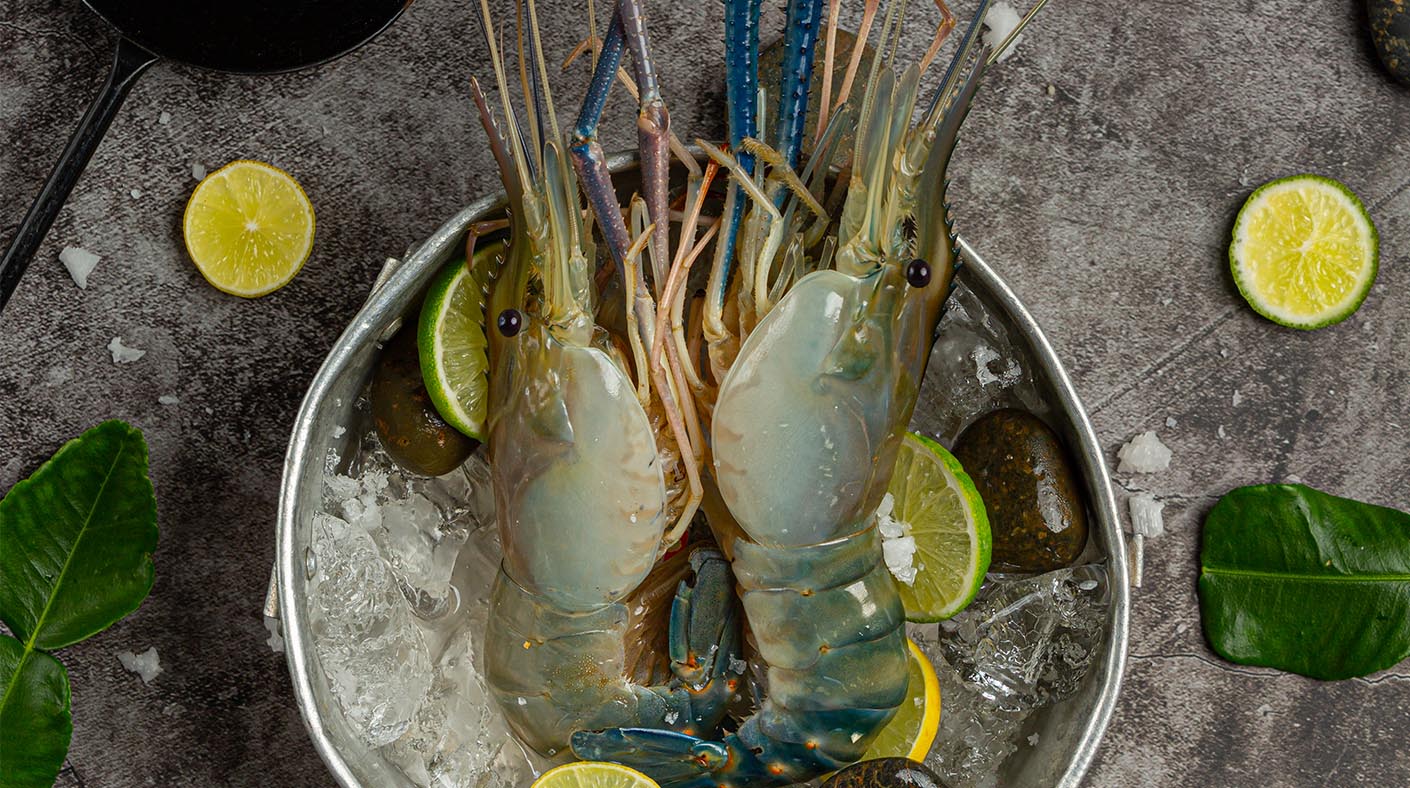
There are bigger prawns in the sea. There is nothing bigger in fresh water.
Macrobrachium rosenbergii is the largest freshwater prawn on earth, and the animals we take out of Sri Lanka's inland reservoirs reach 600 g and beyond. At that weight a single prawn is a centrepiece, not a portion: long-clawed, firm-shelled, and closer to a langoustine than to anything a warm-water shrimp farm produces.
The size is not a genetic trick and it is not a feeding programme. It is what happens when a prawn is given an ancient reservoir to grow in, and the time to use it.
How it grows
Grown in reservoirs, not ponds
Sri Lanka's dry zone is threaded with irrigation tanks, some of them built over two thousand years ago and still holding water. We breed post-larvae in our own hatchery at Pamunugama, stock them into these reservoirs at low density, and leave them to feed on what the water already produces. No cages, no feed pipes, no forced growth.
The trade-off is real and worth stating: this takes longer and yields far less per hectare than an intensive system. What it produces is a cleaner-tasting, firmer animal at a size intensive systems rarely reach, and a reservoir that is still productive the following season, because artisanal fishers take only what has reached size. That is what makes it sustainable in practice rather than on a label.
- Stocking
- Low density, open water
- Feed
- Natural productivity of the reservoir
- Harvest
- Selective, at market size only
- Water
- Ancient inland irrigation tanks
How it is sold
A grade and a weight, not one or the other.
Every prawn is graded A, B or C on how it looks, and weighed separately. All three grades run every size band, and animals selected to travel alive are drawn from across them.
250 below
Under 250 g. Consistent portion size for foodservice.
250+
250 g and above. The most commonly shipped band.
400+
400 g and above. Increasingly hard to source from intensive systems.
600+
600 g and above. The size open-reservoir grow-out reliably produces.
How we supply
Three ways to receive it
Grading decides the route, and it is committed at the holding facility rather than at the airport. From that point the handling, the packing and the paperwork are all set, and every batch travels refrigerated.
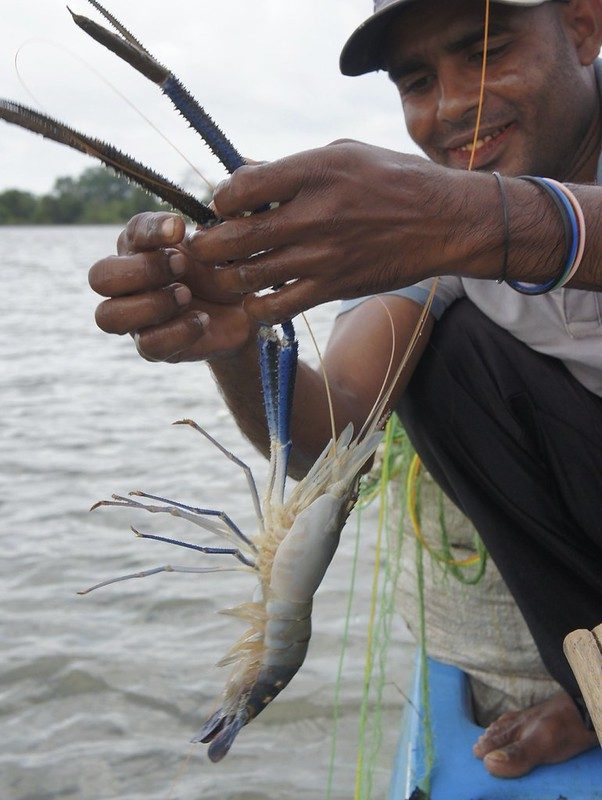
Live
The shortest distance between reservoir and plate.
Selected prawns leave the reservoir alive and stay that way, moved in oxygenated transport we own rather than handed to a carrier. The premium line, for buyers who sell the animal at the table.
Oxygenated, moved live
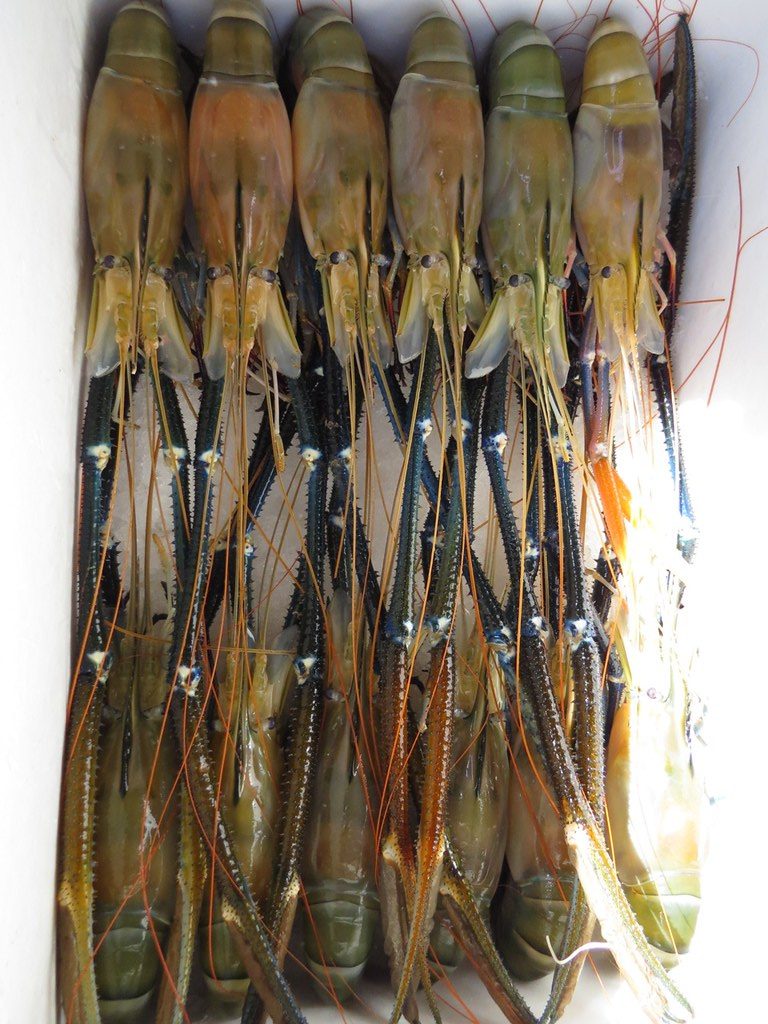
Fresh-chilled, HOSO
Cold. Protected. Fresh.
Head-on shell-on under controlled icing, layered prawn, ice, prawn so every animal sits against cold rather than just the top of the box. The presentation grade: claws and shell intact, colour unbroken.
HOSO, layered icing
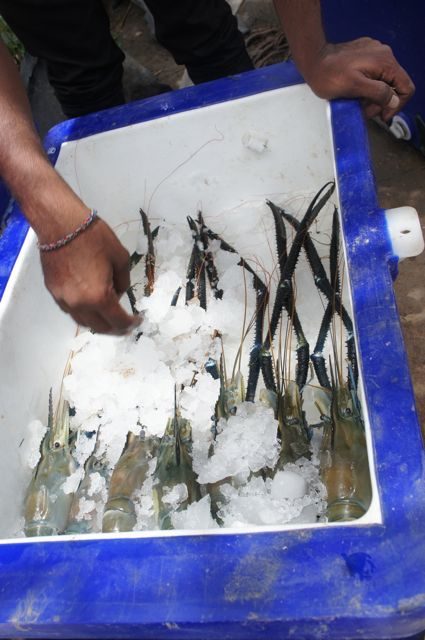
Cryogenic
Captured at freshness. Preserved for distance.
Live prawns reach the processing centre and are frozen cryogenically, fast through the freezing zone rather than slowly. Speed is the point: the less time the animal spends crossing that band of temperature, the more of its texture and condition survive the trip.
Cryogenic, long haul
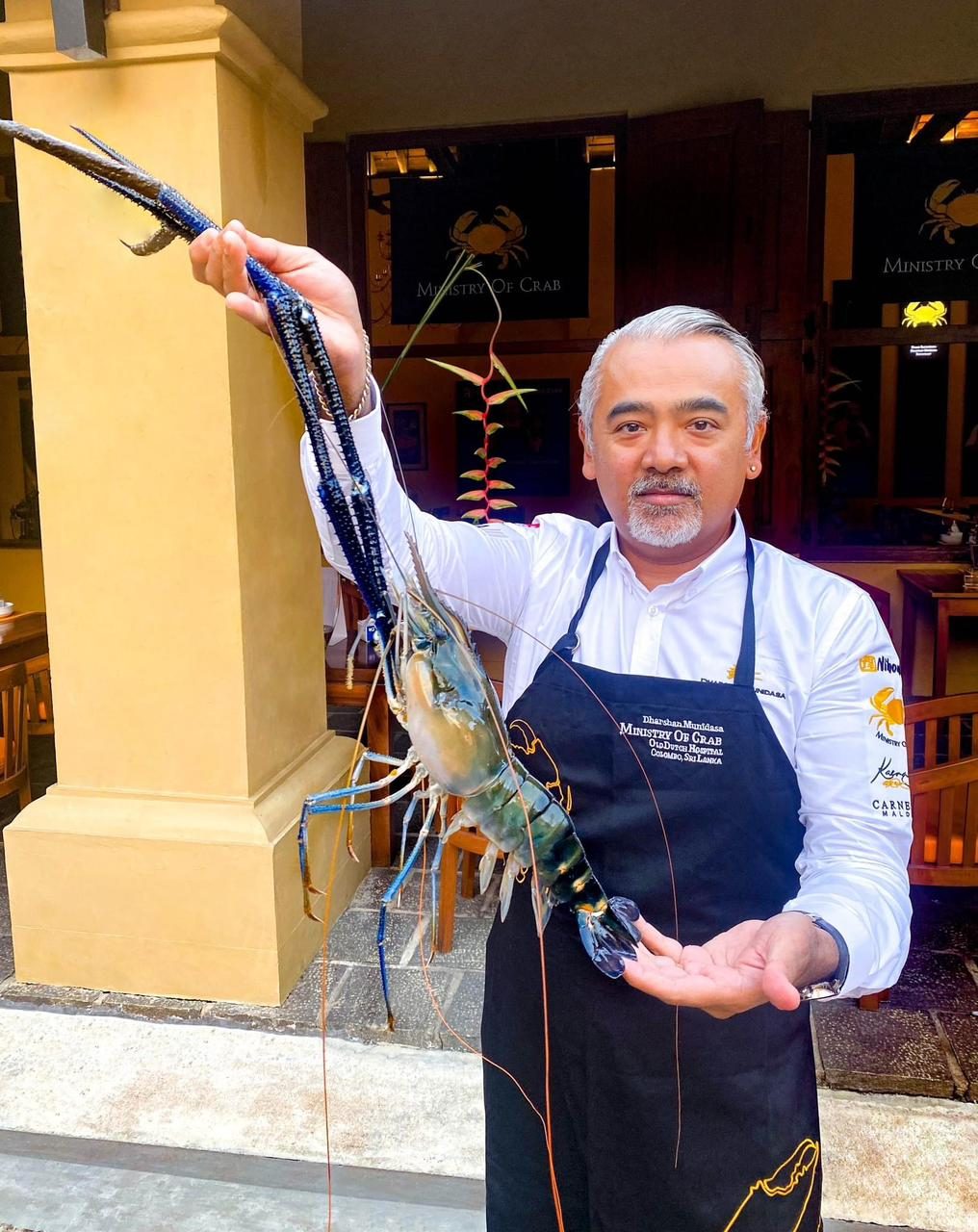
Dharshan Munidasa at Ministry of Crab, Old Dutch Hospital, Colombo.
Where it goes
The kitchens at the other end of the chain.
Ministry of Crab is our largest account, and we supply every one of its kitchens: the Colombo restaurant and the franchise it has opened across Asia. A prawn that came out of an inland reservoir reaches the pass in another country still on our own chain of custody.
We also export to Thailand, where demand for the giant freshwater prawn is long established.
At home it goes to the top of the Sri Lankan market: hotel dining rooms and chef-led restaurants that buy on size and condition.



Alongside other high-end restaurants and hotel kitchens across Colombo.
Traceability
You can ask where it came from
Grade and weight are written on the box at our facility, and the batch behind them traces back through the fishers who landed it to the reservoir it grew in and the hatchery tank it started in. That chain is the product as much as the prawn is.
It exists because we do not buy from a spot market. We stock the water, we work with the same fisher communities season after season, and we buy their harvest back under a standing agreement.
At a glance
- Species
- Macrobrachium rosenbergii
- Common name
- Giant Freshwater Prawn
- Origin
- Inland reservoirs, Sri Lanka
- Hatchery
- Pamunugama, Western Province
- Method
- Hatchery stocked, selectively wild caught
- Max size
- 600 g+
- Grades
- A Premium, B Standard, C Commercial
- Weights
- 250 below / 250+ / 400+ / 600+
- Formats
- Live, HOSO fresh, cryogenic
- Markets
- Thailand, South-East Asia, Europe
Tell us the grade and the format.
Volumes, destination and the condition you need it in. We’ll come back with what we can ship and when.