


People
The company is the partnership
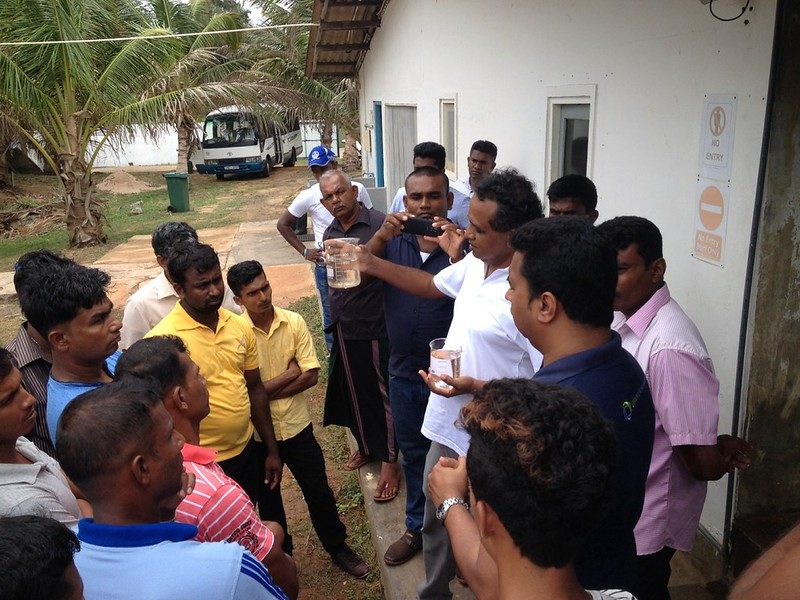
Divron grew out of a development project, and it still works like one: guaranteed markets for fishers, seed supplied long term, training delivered alongside government agencies.
Origin
How Divron started
Divron Bioventures was founded in 2015 by Mr. Shan Meemanage. It grew from the seeds of a project to develop a more sustainable and inclusive foundation for aquaculture in Sri Lanka, funded by the International Development Research Centre (Canada) and Global Affairs Canada.
Mr. Meemanage came to that project as a private sector partner, commercialising and marketing the production that came out of it, and built the company around what the work proved.
A key outcome of the project was the validation of a value chain model that incorporated and enhanced the social capacity of rural communities, and integrated it together with the commercial and technical advancement of aquaculture. This became the vision for Divron Bioventures.
Community
The value chain is the community inside it.
Divron does not own the reservoirs it stocks. It works them in partnership with the rural fishers and farmers who already live on them. That is why the sustainability claim and the business model are the same thing.
Contract farming
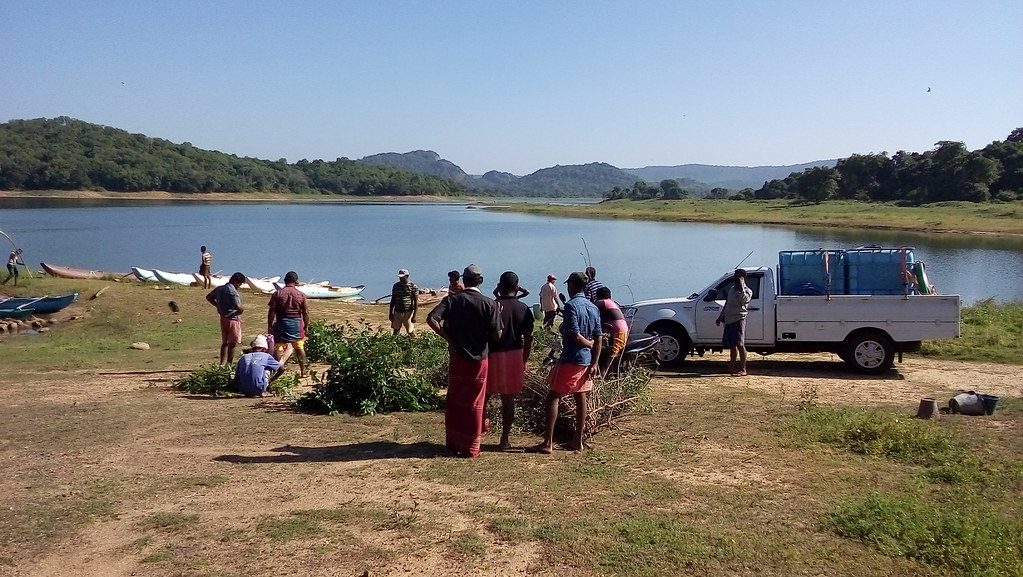
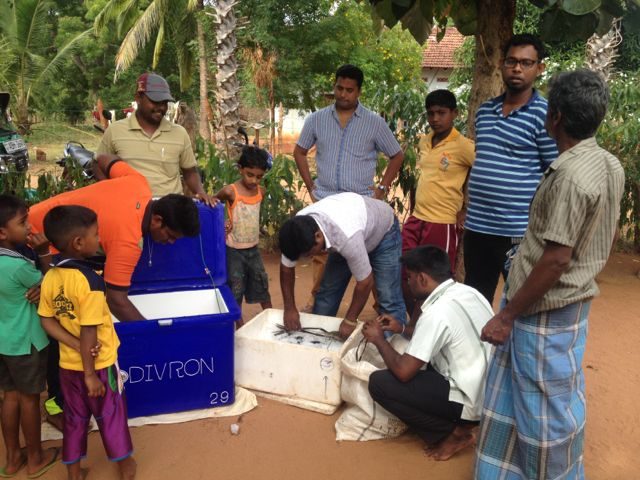
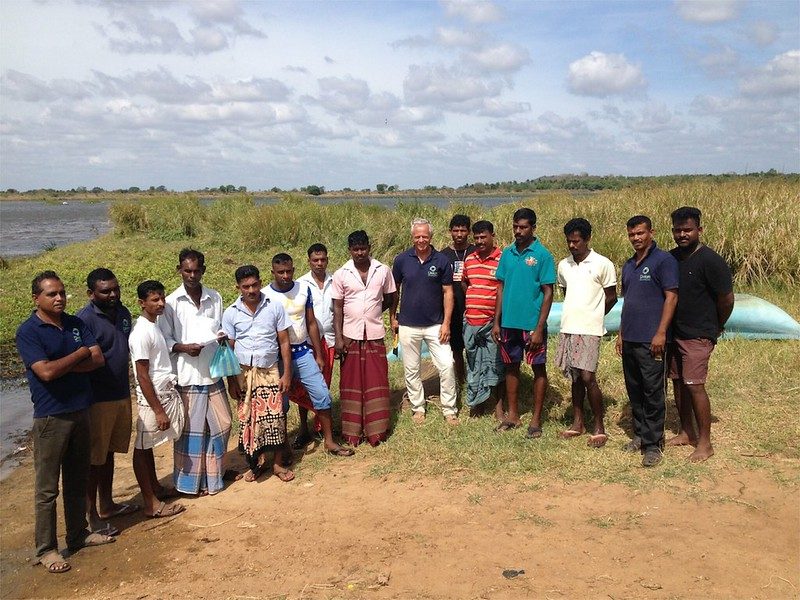
A partnership model with rural farmers and fishers across Sri Lanka who manage and harvest the stocked reservoirs, rather than a supplier list Divron buys from at arm's length.
Around 1,500 inland fishers
They participate directly in the value chain and share in it, rather than selling into it at arm's length. In many of the districts Divron works in, this is one of the few routes to a reliable cash income.
Selective wild-catch harvesting
Artisanal fishers take prawns only once they have reached market size. Leaving the rest in the water preserves the reservoir population and the following season with it.
Training & extension support
Divron provides fishers and collectors with guidance on improved catching and handling practice, and on what premium export markets actually require.
Infrastructure investment
Reefer trucks and cold-storage capacity were built out alongside the fisher supply chain, supported in partnership with the Market Development Facility and Australian Aid.
A team of 50+
Over fifty people across breeding, grow-out, logistics, packing and marketing, most of them recruited from the regions Divron operates in.
Leadership

Mr. Shan Meemanage
Founder
Over 25 years of experience in the ornamental fish industry and in the marketing and export of high quality seafood.
sheloge-alles
Mr. Sheloge Alles
1/1
Mr. Sheloge Alles
CEO
A young entrepreneur in sustainable seafood, and the person who runs Divron day to day: he built the team behind the operation and keeps the chain moving from the hatchery to the export box. His argument is that the slower, cleaner method is also the better business.
The team
Divron employs over 50 people across breeding, grow-out, logistics, packing and marketing, with significant technical and operational experience in aquaculture hatcheries, nursery and grow-out systems in Sri Lanka.
Divron also has an international advisory group that provides technical, scientific and business guidance to the company.
Partnerships
Four relationships hold the value chain together.
01
Fisher communities
Our strategy is to build a platform of opportunity and livelihood improvement with each partner community. Relationships are based on building a long-term market through guaranteed purchasing and marketing, providing seed on a long-term basis for continuous stocking of reservoirs, and providing support through technical training and capacity enhancement. We work across the country, with special emphasis on underdeveloped areas of the Northern and Eastern Provinces.
02
Government agencies
Divron works closely with the National Aquaculture Development Agency (NAQDA), the National Aquatic Resources Research and Development Agency (NARA), the Department of Agrarian Development, the Department of Irrigation and Provincial Ministries of Agriculture and Fisheries. We collaborate on research for improving livelihoods, sustainability, productivity, aquatic health and food safety, and work with government field staff to provide technical training and resource management.
03
Non-government organizations
Divron partners with NGOs to collaborate on economic development for poor and marginalized communities, and to ensure aquaculture becomes a viable, sustainable and equitable opportunity. Building capacity to engage successfully in business, strengthening community participation in natural resource management, and improving health, education and welfare are all integral to building the aquaculture opportunity in Sri Lanka.
04
Market Development Facility
Divron is supported by the Market Development Facility (MDF) in Sri Lanka, a multi-country private sector development program funded by the Australian Government, operating in Fiji, Timor-Leste, Pakistan, Sri Lanka and Papua New Guinea. MDF supports businesses with innovative ideas, investment and regulatory reform that increase business performance and ultimately provide benefits for the poor, as workers, producers and consumers.
Fishery societies: partner with us for a secure and sustainable future.
If your society works a reservoir, the arrangement we offer is set out in full.