


Breeding
Everything starts in the hatchery. We select parent stock from Sri Lanka's own natural populations and raise the post-larvae that go on to stock reservoirs across the country.
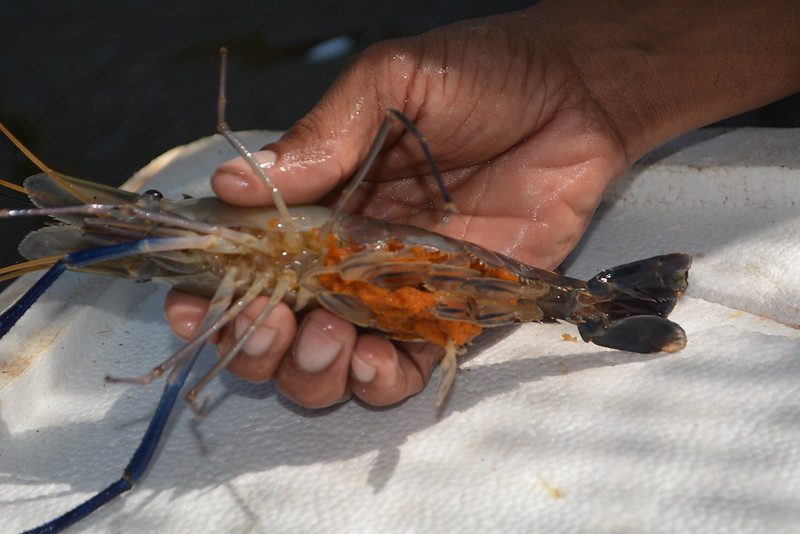
Broodstock
It starts with the right parents.
The giant freshwater prawn is indigenous to Sri Lanka, not an introduced species, and Divron selects its broodstock from that natural population. Everything downstream, the size the animal reaches and the condition it arrives in, is set by that choice before a single larva hatches.
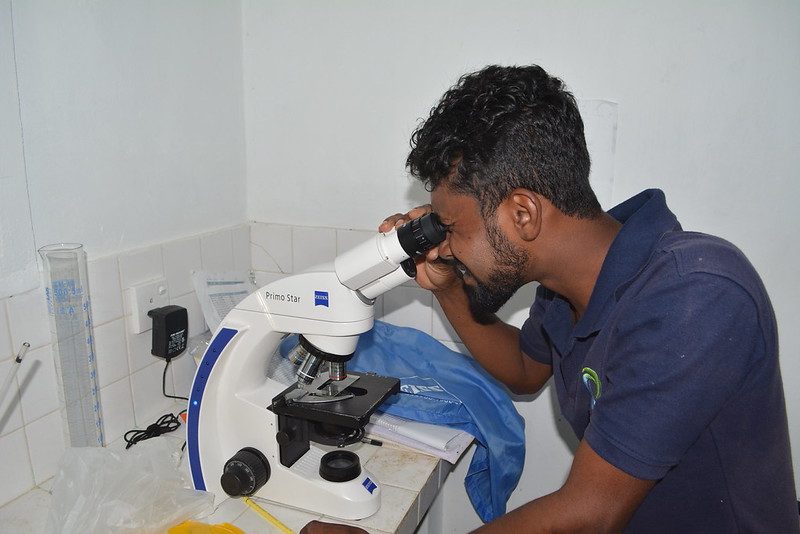
The hatchery is built to reproduce the conditions the species needs: breeding, larval development, water quality, nutrition and early growth, all managed rather than left to chance. That is what makes the supply reliable enough to stock reservoirs on a schedule.
The hatchery
Supply that does not wait for a season.
The hatchery is built for supply rather than demonstration. It produces more than ten million post-larvae every two months, which is what lets Divron stock reservoirs to a schedule instead of whenever a season allows.
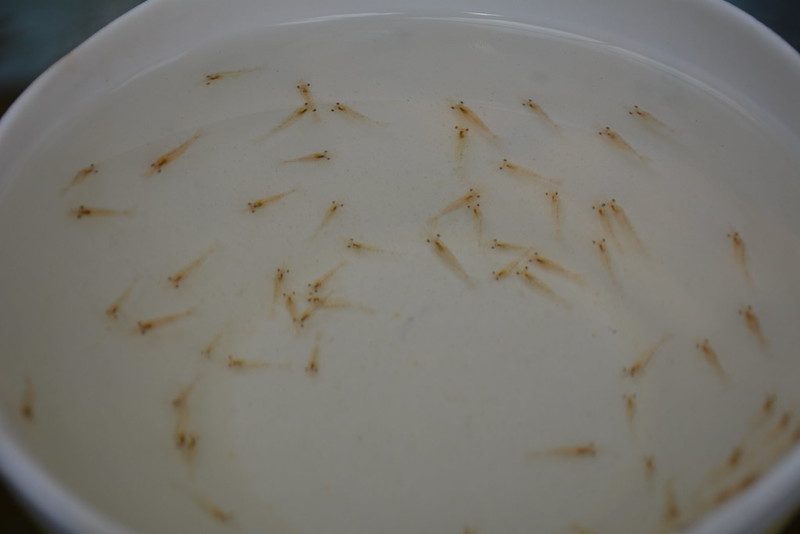
That volume comes out of a natural process, not a shortcut. Each female carries 50,000 to 60,000 eggs, and every larva that hatches is reared on artemia, algae and probiotics through the six weeks that follow.
Hatchery
- Species
- Macrobrachium rosenbergii
- Eggs per female
- 50,000–60,000
- Larval rearing
- 45–60 days
- Output
- 10 million+ post-larvae every 2 months
The first 45 days
Forty-five days under controlled conditions, then a reservoir.
A larva that hatches in our tanks spends its first six weeks being watched. Water quality, feed and density are managed the whole way, because a post-larva that leaves the hatchery weak will not survive a reservoir.
hatchery-day-01
Day 1 larvae in the hatchery tank
1/1
Day 1
The larval cycle begins
Newly hatched larvae enter the rearing tanks.
hatchery-day-10
Larvae at day 10 of hatchery development
1/1
Day 10
Early development
Growth under managed water quality, feed and density.
hatchery-day-45
Post-larvae at day 45, ready for stocking
1/1
Day 45
Post-larvae, ready
Juveniles strong enough for the next stage.
release-to-reservoir
Post-larvae being released into an inland reservoir
1/1
Reservoir
Into open water
Transported out and released into a stocked reservoir.