


Skip to content

Grow-out

Not intensive tank farming. Post-larvae are stocked into open inland reservoirs at low density and grow on the natural productivity of the water, in the same tanks that have irrigated Sri Lanka for two thousand years.

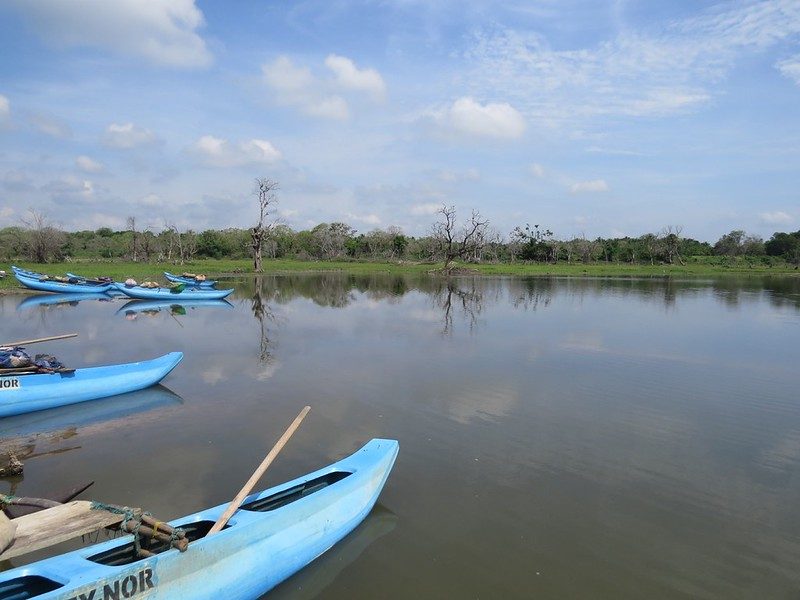
Outrigger canoes moored on a still inland reservoir at first light

Open reservoirs, not ponds

Divron selects ancient tanks and reservoirs with excellent water quality and high natural productivity for its grow-out programme. Stocking density is deliberately low: the prawns feed on what the reservoir already produces rather than on manufactured feed pumped into a closed system.

That is the whole argument for the product. A prawn grown this way takes longer and costs more to reach size, and it reaches a size that intensive systems do not.
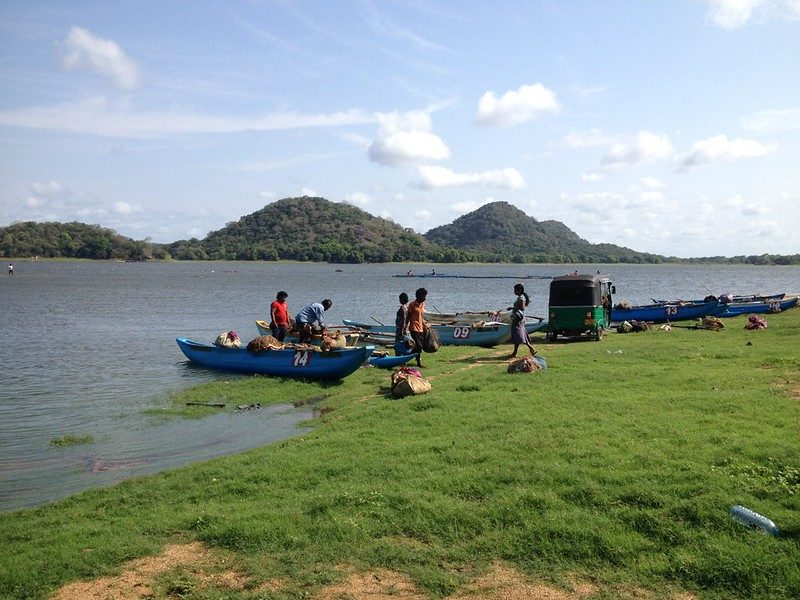
Fishers loading the morning's catch from their canoes on the reservoir shore

Community partnerships

Divron partners with farmers and fisher communities around Sri Lanka who manage and harvest the stocked reservoirs. Relationships are long-term: guaranteed purchase of the harvest, seed supplied on a continuous basis, and technical training delivered alongside government agencies.

Divron is committed to developing these opportunities on a long-term basis to improve the livelihoods of the communities who depend on these natural resources. Poverty is still widespread in many of these areas of rural Sri Lanka, particularly in the Northern and Eastern Provinces, where economic and social recovery is still rebuilding after the conflict.

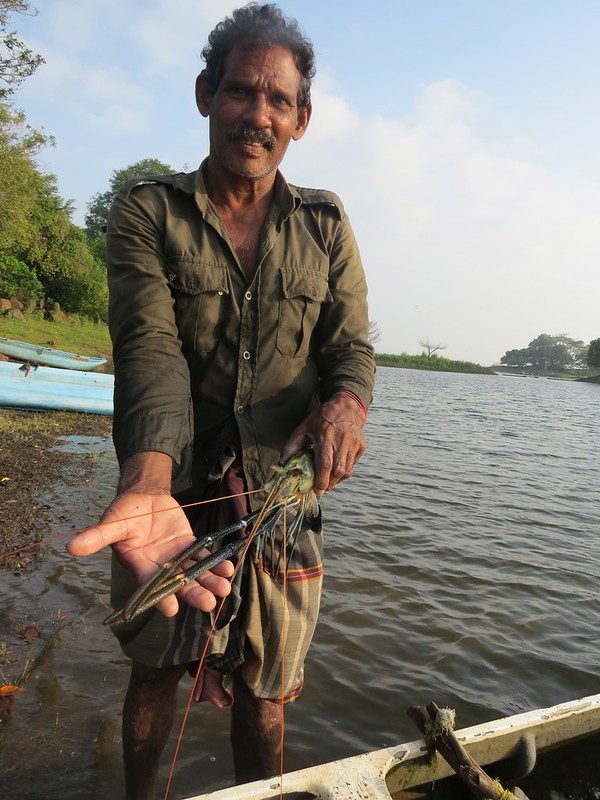
A fisher standing in the shallows holding a giant freshwater prawn by its claws

Growth to harvest size

Prawns are left to reach market size before they are taken. Harvesting is selective: artisanal fishers catch only animals that have reached size, which leaves the reservoir population intact and reproducing. That is the sustainable part of the method, and it is the reason the same water can be fished season after season.

Grown this way, Macrobrachium rosenbergii reaches 600 g and beyond: the largest freshwater prawn species in the world, at the top of its size range.

Stocking

We put life back into the reservoir.

Post-larvae do not simply get tipped into open water. Each stocking is a planned handover from a controlled tank to an ecosystem, and the acclimation step in the middle is what decides how many survive it.

  1. 01

    Prepared at the hatchery

    Post-larvae are counted, conditioned and readied for transport once they have reached day 45.

  2. 02

    Transported inland

    Moved from the coast to the selected reservoir, the leg that takes them from our water to Sri Lanka's.

  3. 03

    Acclimation

    Temperature and water chemistry are brought into line with the reservoir before anything is released.

  4. 04

    Release

    Stocked into open water at low density, alongside the fisher community that works that reservoir.

  5. 05

    Natural growth

    From that point the reservoir does the work. No feed goes in after this step.

Natural growth

45 days in the hatchery. Months in nature.

After stocking, the prawns keep growing on what the reservoir produces. How big they get depends on the water, the food available in it, the stock they came from and, more than anything, how long they are left alone.

That last input is the one an intensive system cannot afford to spend. It is also the whole reason our animals reach a size those systems rarely see.

Genetics

Natural environment

Time

Giant freshwater prawn

See the product